
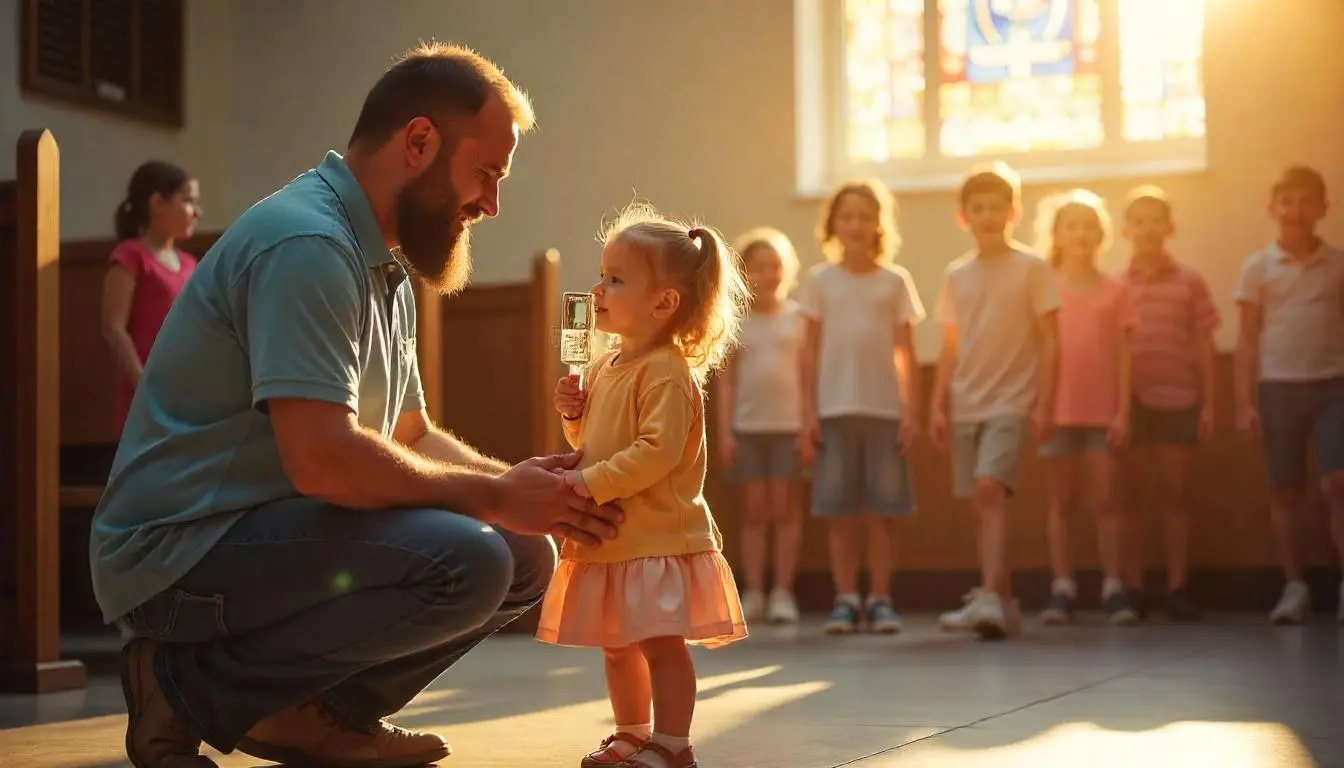

There is a noticeable difference between a place that embraces children and one that merely tolerates them. Parents can sense it immediately—whether they’re stepping into a restaurant, a classroom, or, yes, a church. And this subtle but powerful distinction has long-lasting consequences on whether families return and whether children grow up associating the church with warmth and welcome or with distance and discouragement.
For many families, walking into a restaurant with a handful of young children is an act of courage. The host’s expression, the wait staff’s tone, and the overall environment speak volumes. Are these little ones viewed as valued guests—or as potential disruptions? The same is true for local congregations. While most churches would never post a sign saying “No Children Allowed,” families visiting for the first time will easily discern whether their children are truly welcomed—or merely tolerated.
Churches that embrace children operate with a heart that mirrors Christ’s. These churches recognize that children are not just the church of tomorrow—they are part of the church of today. And how they are received, heard, taught, and protected within the body of Christ will shape their lifelong faith journey.
Embracing Children Means Accepting the Mess
To welcome children is to welcome messiness—both literal and figurative. From spilled snacks in the sanctuary to tiny fingerprints on walls and glass doors, the evidence of young life is often found at knee level. But such “mess” is not a mark of disorder—it’s a sign of growth.
Children learning how to worship, pray, and understand the Word of God do so imperfectly, and that’s exactly how it should be. A silent church may be orderly, but it is not always alive. Vibrant churches understand that the slight chaos that accompanies children is a reflection of health and future.
Just as toddlers spill milk as they learn to feed themselves, children will stumble spiritually, emotionally, and behaviorally as they learn the rhythms of faith. A church that embraces them leans into this reality, offering patience, grace, and leadership—not judgment.
Embracing Children Means Valuing the Noise
Children make noise—and in a thriving church, that noise should be welcome. From laughter in the hallways to questions in Sunday School, from cries in the sanctuary to squeals on the playground, these sounds are evidence of vitality.
Yet some churches bristle at the sounds of youth, placing age restrictions on worship attendance or side-lining children during key moments of congregational life. But such practices communicate, subtly but effectively: “You can be here, but only if you’re quiet and don’t interrupt what the adults are doing.”
Contrast that with Jesus’ model in the Gospels. When children clamored for His attention, He didn’t shoo them away. He embraced them. He rebuked His own disciples for trying to push them aside. Churches that reflect the heart of Christ must be willing to hear the joyful, noisy, unpredictable expressions of children—not as interruptions but as offerings.
Embracing Children Means Prioritizing Their Safety
Welcoming children also means protecting them. Churches that embrace children invest in strong safety policies, secure check-in procedures, volunteer background checks, and well-trained children’s ministry staff. This is not simply about liability—it is about discipleship. When a child walks into church, they should feel as safe as they do at home, knowing the adults around them are trustworthy, attentive, and committed to their well-being.
A church without clear safety protocols teaches, even unintentionally, that children are an afterthought. But a secure environment communicates, “You matter here.”
Embracing Children Means Visibility and Investment
Take a close look at your worship bulletin, social media pages, church website, or announcements. Are children’s ministries celebrated? Are events for children promoted with the same enthusiasm as adult conferences and worship services?
Visibility matters. If children are consistently overlooked in public communication, they’ll likely feel overlooked in practice.
Furthermore, budgets reflect values. If the children’s ministry receives only leftover funds or is under-supported in staffing, facilities, and curriculum, it sends a message about priorities. A church that embraces children does more than assign volunteers—it invests sacrificially in building an environment where children thrive spiritually.
Embracing Children Means Seeing Through Their Eyes
Too often, ministry strategies focus on what parents want from the church. While it’s crucial to partner with parents in discipleship, it’s equally important to understand the child’s experience. How do the children feel about worship? Are they engaged? Do they feel seen and heard?
Leaders who ask children about their church experiences gain insights that sharpen their ministry approach. It takes humility and intentionality to bend low, both physically and emotionally, and meet children where they are. But doing so brings us closer to the example Christ set—welcoming the little ones not just as visitors, but as vital members of the Kingdom.
Jesus Modeled What It Means to Embrace Children
In Luke 18:15–17 and Mark 10:13–16, Jesus does more than permit children—He welcomes them. He holds them, blesses them, and even uses them as the standard by which adults should approach the Kingdom of God. When churches neglect to embrace children, they not only miss a demographic—they miss Jesus’ heart.
He did not respond to children with sighs of inconvenience or rules of exclusion. He made space. He became indignant when His disciples tried to turn them away. That righteous anger should stir us today when we hear others dismiss the spiritual worth of children.
So, the next time a child cries in worship, don’t be annoyed. Be moved. Be reminded. Be grateful. That sound is the sound of life. That sound is the sound of legacy.
Final Thoughts: A Church Worth Returning To
Families often choose their place of worship based on how their children are received. Just as a family may choose not to return to a restaurant that made them feel unwelcome, families may drift from churches that fail to embrace their children. On the other hand, when children feel loved, valued, and seen, families will stay—and grow.
And for churches seeking to create healthier, more family-focused ministries, Start Your Own Bible School is an invaluable resource. Their experience in church revitalization, family ministry consulting, and educational platform development can help your church become a place that embraces children not as distractions but as disciples.
If your ministry is ready to raise the standard, invest in the next generation, and become the kind of church families return to again and again, Start Your Own Bible School is here to assist you—every step of the way.
Be the church that welcomes the child—and you welcome the future.


